When most people think of fire in a national park, they think of something going wrong. In South Florida’s national parks, fire is often a sign that things are going right.
Across Everglades National Park and Big Cypress National Preserve, fire is not just natural. It’s essential. In fact, some of the most important conservation work happening in these parks involves intentionally setting fires.
A Natural Part of the Landscape
Fire has shaped South Florida’s ecosystems for thousands of years. Lightning strikes during the wet season once ignited fires across the Everglades and Big Cypress. Over time, plants and animals adapted to depend on these periodic burns.
For example, pine rocklands need fire to clear dense growth and let sunlight reach the ground. Sawgrass marshes rely on fire to return nutrients to the soil. And some plant species only sprout after exposure to heat or smoke.
Without fire, these landscapes can become overgrown, less diverse, and more vulnerable to larger, more destructive wildfires due to the buildup of fuels.
What Are Prescribed Burns?
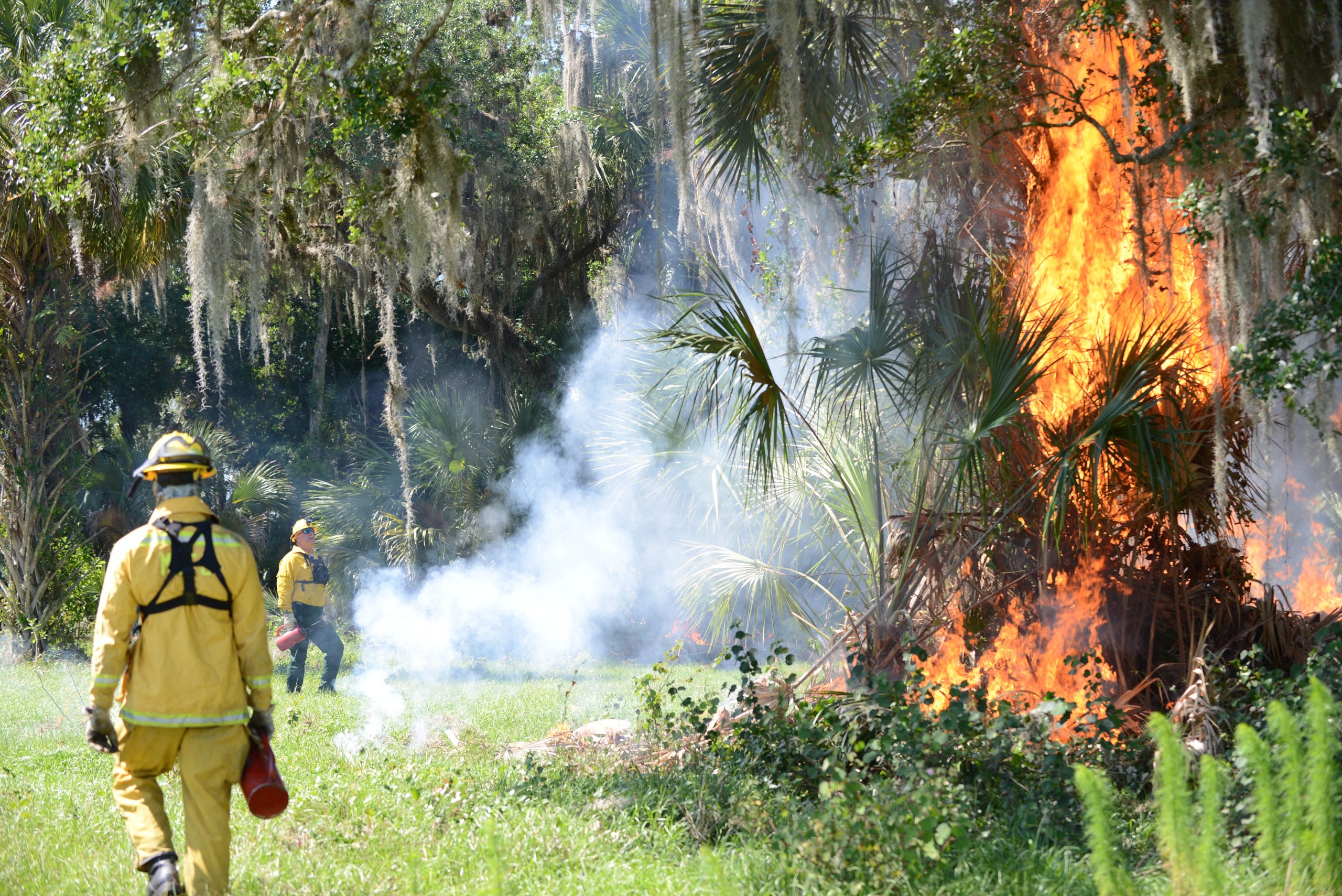
Park managers use prescribed burns to mimic natural fire cycles and support ecosystem health. Unlike natural fires, prescribed burns are intentionally set under controlled conditions and carefully managed by trained professionals. In Everglades National Park, Biscayne National Park, and Big Cypress National Preserve combined, hundreds of thousands of acres may be treated with prescribed fire in a single year, depending on conditions.
Planning a prescribed burn can take months. Before any fire is set, park staff evaluate wind, weather, and vegetation to make sure conditions are appropriate. Wind influences how quickly a fire spreads, while temperature, humidity, and vegetation determine how intensely it burns and how it behaves across the landscape.
Even after a burn begins, conditions are continuously monitored by trained crews using weather instruments and on-the-ground observation. Additional personnel on standby ensure the fire remains contained. If conditions change, these teams are equipped to pause or stop the burn using established control lines, fire trucks, hand tools, as well as advanced methods like aircraft and drones.
Why Prescribed Burns Matter
Prescribed burns play a vital role in sustaining the ecosystems that define South Florida’s national parks. They clear out built-up vegetation, creating space for new growth and
preventing forests and marshes from becoming too dense. This helps maintain the open landscapes that many native species depend on.
They also support biodiversity. Some plants only regenerate after fire, and the fresh growth that follows provides food and habitat for wildlife. In addition, fire helps limit invasive species, like Brazilian Pepper, that are not adapted to fire cycles. By giving native plants a natural advantage, fire helps preserve the character of these ecosystems.
Last but not least, they protect nearby communities. By reducing excess vegetation, prescribed burns lower the risk of large, fast-moving wildfires, especially during South Florida’s dry season. Treated areas often burn less intensely during wildfires, helping firefighters manage conditions more effectively and reducing their overall impact.
What Visitors May See During a Burn
For visitors, prescribed burns offer a chance to see conservation in action. You might notice smoke in the distance, temporary trail or road closures, or areas of the landscape that appear blackened. What may look like damage is actually part of a natural process.
Recovery begins quickly after a burn. Within weeks, new growth appears. Fresh green shoots push through the soil, and wildlife returns. The cycle of renewal begins again just as it has for centuries. For many visitors, seeing this transformation firsthand is one of the most striking parts of the national park experience.
Protecting the Future of Florida’s National Parks
Prescribed burns are just one of many ways South Florida’s national parks are actively cared for and protected.
Through education, exploration, and conservation, The Alliance for Florida’s National Parks helps support the programs that allow visitors to better understand these landscapes across Big Cypress National Preserve and Biscayne, Dry Tortugas, and Everglades National Parks.
Learn more about how you can support Florida’s national parks at FloridaNationalParks.org