%20(1).avif)
Everglades National Park
Established in 1947, Everglades National Park was among the first national parks in the world created to protect biodiversity rather than scenery. Spanning roughly 1.5 million acres, it is the largest subtropical wilderness in the United States and carries three international designations: World Heritage Site, International Biosphere Reserve, and Wetland of International Importance. Here, tropical and temperate species share the same landscape, sustained by the seasonal rise and fall of fresh water moving slowly south toward Florida Bay.
Quick Facts
A Closer Look
For generations, the Everglades was dismissed by outsiders as an impassable, worthless swamp. Beginning in the 1800s, dams, canals, levees, and roads diverted its water for agriculture and growing cities, and invasive species took hold as the natural system dried out. Established in 1947, the park was a turning point, one of the first anywhere created specifically to protect a fragile ecosystem rather than a dramatic landscape. Today the Comprehensive Everglades Restoration Plan is working to rebuild the historic natural flow of clean water, and early results, birds returning to nest and invasive plants removed near Royal Palm, offer real reason for hope.
Getting There & Visitor Centers
Ernest F. Coe Visitor Center: 40001 State Road 9336, Homestead, FL - 305-242-7700
Flamingo Visitor Center: 38 miles past Coe, on Florida Bay - 239-695-2945
Shark Valley Visitor Center: Tamiami Trail (US 41) - 305-221-8776
Marjory Stoneman Douglas Visitor Center: Everglades City - 239-695-3311
Things To Do
- Trails near Coe: Anhinga, Gumbo-Limbo, Pinelands, Pa-hay-okee Overlook, Mahogany Hammock, and West Lake
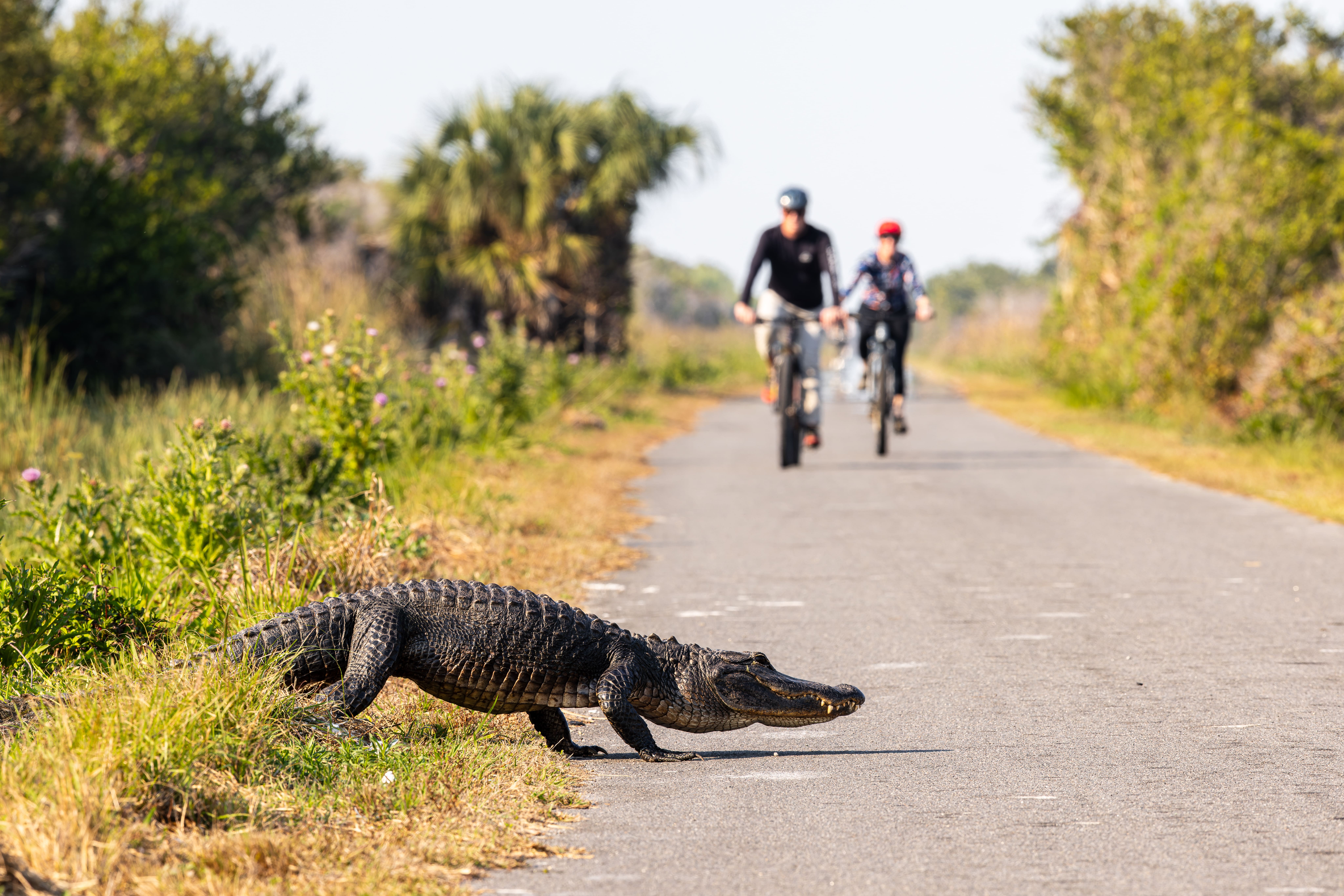
- Bobcat Boardwalk and Otter Cave, plus a 2-hour tram tour and 15-mile bike/walk loop at Shark Valley
- Boat tours into Florida Bay and the Ten Thousand Islands from Flamingo
- Canoeing and kayaking, including the 5.5-mile Nine Mile Pond loop
- Drive-in camping at Long Pine Key and Flamingo
Plan Your Visit
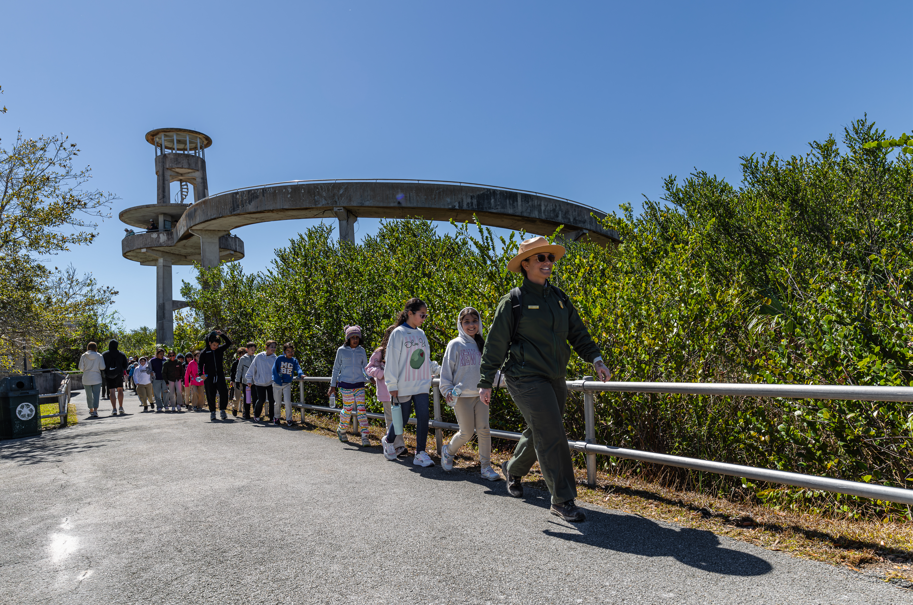
Everglades National Park is home to the longest continuously running education program in the National Park Service. Its more than 10 multi-touchpoint curriculum-based programs bring approximately 76,500 students, teachers, and learners into the park each year for in-person field trips, with total reach exceeding 150,000 when community events and virtual programs are included. Serving 4th through 12th grades from surrounding counties, offerings range from day trips to overnight camping excursions, giving students hands-on experience through hiking, snorkeling, scientific experiments, and more. They explore Miccosukee chickee shelters, the Cold War-era Nike Missile Base, and diverse ecosystems including wetlands, hardwood hammocks, pinelands, and coastal estuaries. The model extends beyond the park itself: rangers prepare students with a classroom visit before the field trip and return afterward to deepen understanding and anchor discoveries to curriculum in ways that only real-world experience can.
Programs The Alliance Supports Here
- Education Programs (10+)
- Community Outreach
- Junior Ranger Angler
- Nike Missile Festival
Why Your Support Matters
Education programs at Everglades National Park receive no federal funding and depend entirely on private philanthropy. The Alliance for Florida's National Parks uses the power of philanthropy to support education, exploration, and conservation in Everglades, Biscayne, and Dry Tortugas National Parks and Big Cypress National Preserve. Your gift keeps these programs, research, and conservation work possible.
%20(1).avif)
%20(1).avif)
%20(1).avif)
.png)

.jpeg)